Minoxidil
The most-studied topical for pattern hair loss, and the benchmark every newer agent is measured against.
 By E. HartleyDermatology Editor
Topical minoxidil reliably increases hair count in male and female pattern loss, with typical gains of 15–25% over 24–48 weeks. It works by extending the growth phase, not by addressing the hormonal driver of the loss, so benefit continues only while use continues. It is the correct baseline against which to judge any newer mechanism.
Grades for hair treatments change. Know when they do. Get an alert when a grade moves, plus each new review. About 2 emails a month. No products, no sponsors.
What it is
Minoxidil began as an oral antihypertensive. Clinicians noticed patients regrowing hair, and a topical formulation followed. It remains one of only two agents approved for androgenic alopecia[1]Olsen EA, et al. (2002) — A randomized clinical trial of 5% topical minoxidil versus 2% and placebo in men. J Am Acad Dermatol., and by volume of trial data it is the most thoroughly characterized topical in the category.
Its popularity is a double-edged fact for this review: it works, but its ubiquity has made it the ceiling of most people's expectations, a ceiling set by a molecule that was never designed to reach the follicle efficiently.
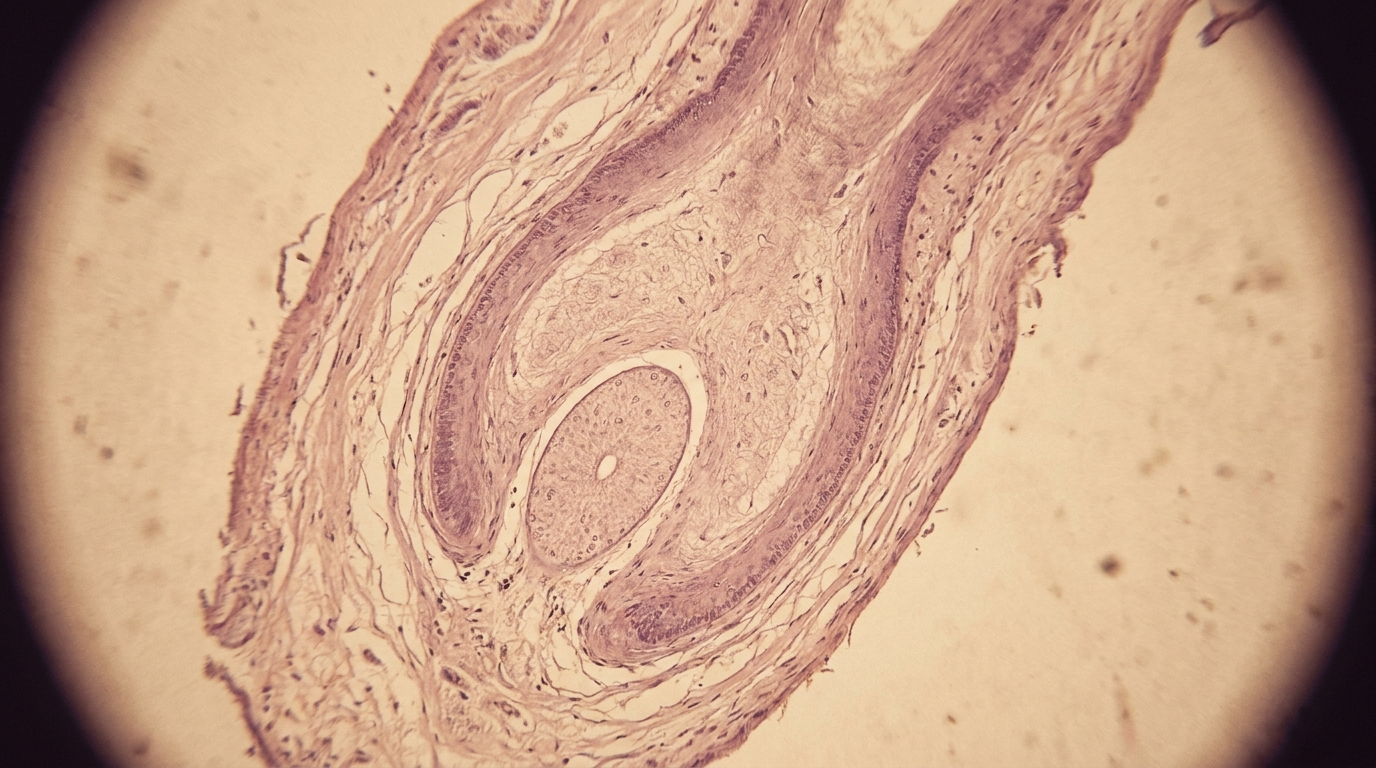
Mechanism
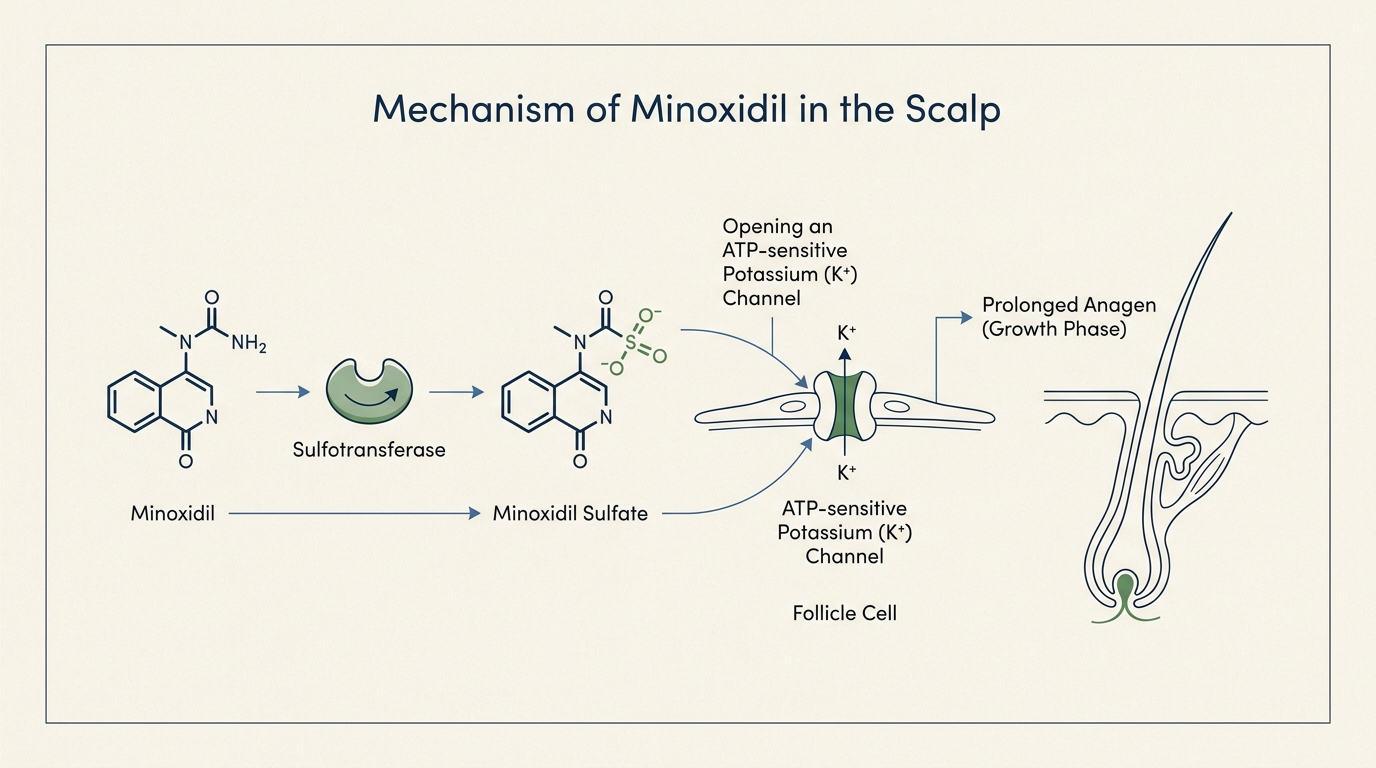
Minoxidil is a prodrug; the sulfotransferase enzyme in the scalp converts it to minoxidil sulfate, the active form. That conversion opens ATP-sensitive potassium channels and prolongs the anagen (growth) phase of the follicle[2]Messenger AG, Rundegren J (2004) — Minoxidil: mechanisms of action on hair growth. Br J Dermatol.. Crucially, individuals vary widely in how much sulfotransferase they express, which is one reason response rates are so uneven, and why "it didn't work for me" is often a delivery-and-conversion story, not a mechanism failure.
What the human trials show
Selected controlled trials, non-vellus hair count vs. baseline at study endpoint.
The effect is real, replicated, and independent of the manufacturer, which is what earns the A. It is also modest and maintenance-dependent, which is what leaves room for the field to do better[3]Gupta AK, et al. (2022) — Efficacy of minoxidil for androgenetic alopecia: a network meta-analysis. J Am Acad Dermatol..
Safety & practical notes
Topical minoxidil is well tolerated. The most common issues are scalp irritation (often from the propylene-glycol vehicle rather than the drug) and an early, temporary shed as follicles synchronize into a new cycle. Systemic effects from topical use are rare.
2 practical limits recur across the literature: adherence collapses because it must be applied indefinitely, and a meaningful subset of users are poor converters whose scalps simply don't activate the drug. Both are delivery problems, and delivery is where the next section of the field is being written.